
Duke Energy Halts Offshore Wind Plans Amid Cost Concerns |
Duke Energy suspends offshore wind projects off North Carolina's coast, citing economic challenges, following an independent evaluation. |
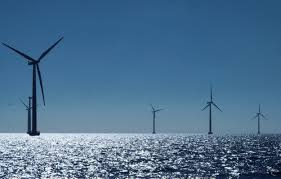
In a recent development, Duke Energy has decided to suspend its offshore wind energy initiatives off the coast of North Carolina, citing economic infeasibility.
This decision follows an independent evaluation revealing that such projects are not cost-competitive at this time.
The evaluation process, known as the Acquisition Request for Information (ARFI), was initiated in January 2025.
It aimed to gather detailed market data from three wind energy area leaseholders: Avangrid, TotalEnergies, and Cinergy, a non-regulated subsidiary of Duke Energy.
These entities collectively submitted eight offshore wind development proposals.
The ARFI sought information for up to 2,400 megawatts of offshore wind capacity by 2035, enough to power approximately 1.5 million homes.
However, the findings, filed with the North Carolina Utilities Commission on August 11, 2025, indicated that all submissions exceeded the benchmark reference price, which was based on the cost of solar plus battery storage.
An independent evaluator, Power Advisory, confirmed these conclusions.
As a result, Duke Energy announced that no requests for proposals would be issued for offshore wind projects at this time.
Despite this setback, the data collected will inform Duke Energy's 2025 Carolinas Resource Plan, scheduled for filing on October 1, 2025.
This plan will guide future long-term energy planning considerations.
Local officials and residents have expressed mixed reactions to this decision.
Some coastal community leaders, like Brunswick County Commissioner Marty Cooke, have voiced relief, citing concerns over potential impacts on marine life and tourism.
Cooke stated, "The thing is, we never wanted them to begin with. They're the most expensive, most dangerous, the most ineffective way. Oh, it sounds good, they never wanted our opinion; all they did was just window dressing... every time we turn around, it was closer and closer and closer to our beaches. And people don't want to look at that."
Conversely, environmental advocates and clean energy proponents have expressed disappointment.
Erin Carey, director of coastal programs for the N.C. Sierra Club, emphasized the importance of offshore wind in achieving clean energy independence, especially amid volatile fossil fuel markets.
She remarked, "The significance of this auction cannot be overstated. At a time when our country is struggling with volatility and skyrocketing prices in fossil fuel supply and demand, it's more important than ever that we look toward a future of clean energy independence."
In the broader context, North Carolina has been exploring various renewable energy avenues.
Notably, the Desert Wind Farm, also known as Amazon Wind Farm US East, became operational in 2017 near Elizabeth City.
With a capacity of 208 megawatts, it was the first large-scale wind farm in the southeastern United States.
Additionally, the Timbermill Wind project in Chowan County commenced operations in December 2024, further contributing to the state's renewable energy portfolio.
These developments highlight the ongoing efforts and challenges in balancing economic viability, environmental concerns, and energy needs in North Carolina's pursuit of a sustainable energy future.
As the state continues to navigate these complexities, the decisions made today will undoubtedly shape the energy landscape for years to come. |
0 Comments
Join the conversation
Be the first to comment
Share your thoughts above.